

Borgata Online’s relaunch in New Jersey and Pennsylvania is more than a brand refresh. It shows how online casino competition is shifting toward navigation, rewards visibility, game discovery, live dealer access, and responsible platform design. BetMGM announced the reimagined Borgata Online platform on June 29, 2026, building on Borgata’s position as one of New Jersey’s earliest regulated online casino brands after its 2013 debut. For gclubgod.com readers, the larger story is clear: casino UX is becoming a product feature, not a decoration.
Online casino users now compare more than slot libraries or headline promotions. They compare how fast they can find account settings, how clearly rewards are organized, whether responsible play tools are visible, and how smoothly a platform connects mobile play with a land-based casino brand. That is why Borgata Online’s New Jersey and Pennsylvania relaunch matters across the U.S. iGaming market.
Why Borgata Online’s Relaunch Matters In Two Mature Casino States
New Jersey and Pennsylvania are two of the most important U.S. online casino markets, which makes Borgata Online’s relaunch a useful signal for the wider industry. New Jersey’s Division of Gaming Enforcement reported $276.3 million in internet gaming win for May 2026, up 11.9% from May 2025. Pennsylvania’s Gaming Control Board reported $254.8 million in internet casino-type gaming revenue for May 2026, up 9.44% year over year.
Those numbers show why operators are investing in platform experience instead of relying only on sign-up offers. In mature states, users already have multiple regulated casino options. The difference between keeping a player engaged and losing that player to another app can come down to design choices that feel small on paper: faster menus, clearer rewards dashboards, easier game filters, cleaner cashier flows, and less friction around account settings.
BetMGM’s Borgata Online platform relaunch emphasized a refreshed interface, streamlined navigation, a unified Rewards Hub, and a continued catalog of more than 4,000 games. The relaunch also connects the digital brand to Borgata Hotel Casino & Spa in Atlantic City, where a Fourth of July weekend activation marked the launch.
That physical-digital connection is part of Borgata’s edge. New Jersey players may already know the Atlantic City property. Pennsylvania players may know the BetMGM ecosystem through online casino or sportsbook products. The redesigned Borgata Online experience tries to make that brand equity easier to understand inside the app itself.
Casino UX Is Now A Retention Tool
Casino UX used to mean visual polish. In 2026, it increasingly means retention infrastructure. A platform with thousands of games can feel deep or confusing depending on how discovery is organized. A rewards program can feel useful or buried depending on whether users can find points, tier status, bonuses, and expiration rules in one place. A live dealer lobby can feel premium or crowded depending on filters, load speed, table categories, and clear limits.
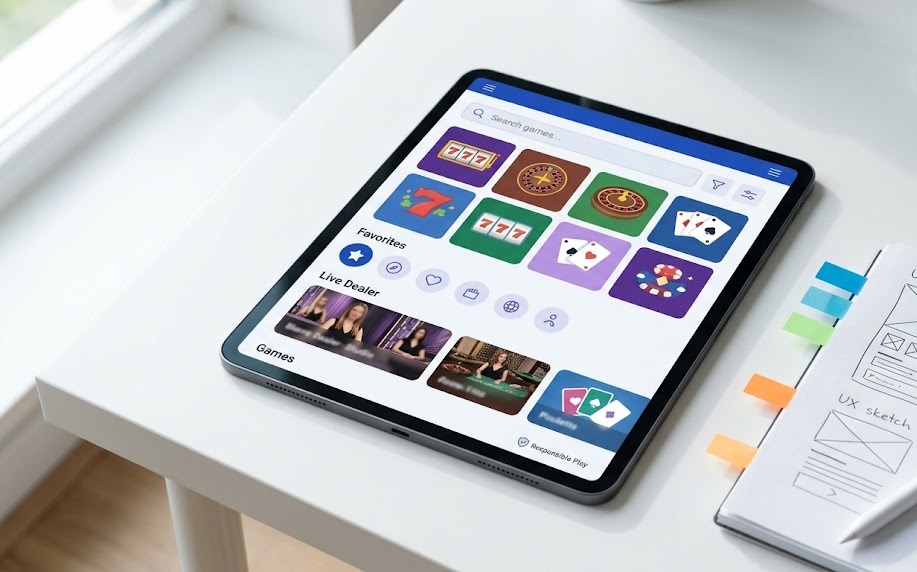
The unified Rewards Hub is the clearest example. Players do not benefit from a loyalty ecosystem if they need to move through separate screens to understand bonus status, Borgata Rewards points, MGM Rewards progress, or available offers. A central hub can reduce confusion, which matters in a regulated casino environment where terms, eligibility, and expiration rules shape the real value of an offer.
That same logic applies across sportsbook and casino platforms. Readers who compare real-time betting and online casinos already see how live markets, casino games, and account systems are blending into a single digital entertainment experience. The stronger platforms are not just adding more content. They are making the content easier to evaluate.
For a casino brand, UX can now influence trust. A clean interface can help users see account settings, play history, rewards status, responsible gambling controls, and payment options without feeling pushed toward one action. A cluttered interface can create the opposite effect, especially when promotions are displayed more clearly than limits, terms, and support tools.
What The Relaunch Says About Game Libraries And Discovery
Borgata Online’s continued catalog of more than 4,000 games shows that game volume still matters. Large libraries give users access to slots, table games, live dealer tables, jackpots, branded titles, and exclusive releases. Yet volume alone can create a navigation problem. The larger the catalog, the more important UX becomes.
A casino app with hundreds or thousands of games needs strong categories, search tools, filters, recent-play sections, favorites, provider groupings, and live dealer organization. The player should not need to scroll through endless tiles to find blackjack, roulette, baccarat, new slots, jackpot games, or responsible play settings. Good design turns a big catalog into usable choice.
Borgata’s relaunch also reflects a broader casino platform trend: online casinos are becoming entertainment hubs with layered features. Rewards, game discovery, live dealer content, branded events, on-property benefits, and mobile account tools are all competing for space. The operator that organizes those layers better can make the same game library feel more premium.
This matters for users comparing regulated casinos in New Jersey and Pennsylvania, but it also matters for readers researching broader gambling platforms. Even users looking at casino-first products or top offhsore casinos still need to evaluate the same basics: account clarity, terms visibility, payment rules, responsible gambling tools, and platform reliability. A large menu is only useful when the rules and interface make sense.
Why New Jersey And Pennsylvania Data Raises The Stakes
The New Jersey and Pennsylvania revenue reports make the UX story more important. Online casino revenue is not a side category in these states. It is a major part of the regulated gambling economy. When New Jersey posts $276.3 million in monthly internet gaming win and Pennsylvania posts $254.8 million in monthly iGaming revenue, operators have a financial reason to improve the product experience.
New Jersey’s May 2026 gaming revenue report also shows the scale of online casino growth compared with some retail and sports wagering categories. Pennsylvania’s May 2026 iGaming revenue shows a similar pattern, with online slots, online table games, and online poker contributing to a large statewide total.
That growth creates pressure. More revenue can draw more regulatory attention, more product investment, and more scrutiny of how platforms present promotions, limits, and support resources. A cleaner app experience can support both commercial goals and compliance goals when it helps users find account information and rules before they play.
The UX race is also a brand race. Borgata is not a new digital name trying to build awareness from scratch. It has Atlantic City roots, MGM Resorts connection points, and a regulated online casino history in New Jersey. The relaunch suggests that established casino brands still need to modernize if they want to compete with newer apps that were built mobile-first.
Responsible Design Belongs Inside The UX Conversation
Casino UX should not be measured only by speed, color, and convenience. Responsible design matters because online casino access is immediate, private, and mobile. A responsible platform should make limits, account controls, time reminders, support links, and terms easier to locate, not harder.

That is why design choices around rewards and promotions require care. A central rewards hub can improve clarity, but it should not make bonus tracking feel more important than understanding eligibility, playthrough rules, withdrawal limits, or responsible gambling tools. Strong casino UX should help users slow down and review the rules when needed.
The National Council on Problem Gambling provides problem gambling support resources for people seeking local help, referrals, and information. A mature casino market should make those support pathways visible. The most credible operators will treat responsible gambling controls as part of product quality, not as a footer link that users rarely see.
Borgata Online’s relaunch arrives at a moment when casino platforms are being judged by more than content volume. Regulators, users, and industry observers are paying attention to how digital casino brands present offers, account tools, and safety information. A platform that makes games easy to find but hides controls behind extra clicks creates an uneven experience. A platform that makes both entertainment and account management clear has a stronger long-term case.
What Casino Platforms Should Learn From Borgata Online
Borgata Online’s New Jersey and Pennsylvania relaunch shows that online casino competition is moving into the details. The big signals are the redesigned interface, streamlined navigation, unified rewards experience, large game catalog, and cross-connection with Borgata Hotel Casino & Spa. The deeper lesson is that casino UX is now part of how users judge trust, convenience, and platform quality.
For gclubgod.com readers, the takeaway is not that one relaunch settles the online casino race. It is that major operators are treating design as a competitive edge in markets where users have choices. A casino platform can have thousands of games, but the experience depends on how those games are organized, how rewards are explained, how terms are displayed, and how responsible tools are built into the user journey.
The next stage of online casino competition will likely reward operators that can combine depth with clarity. Game variety still matters. Rewards still matter. Brand recognition still matters. Yet the platform that helps users understand what they are seeing, manage their account responsibly, and move through the app without confusion may have the stronger position in mature U.S. casino states.