
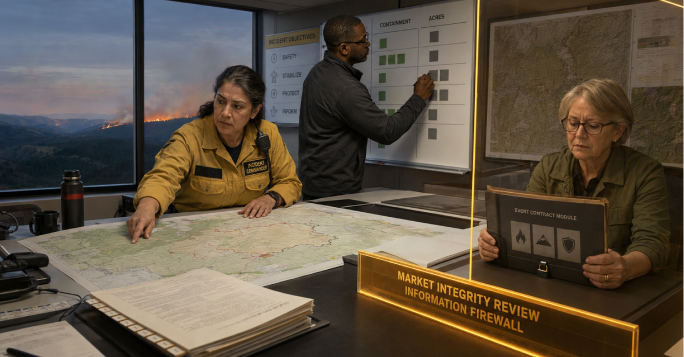
Nine Democratic senators have asked the Commodity Futures Trading Commission to restrict wildfire prediction markets following reports that more than $1.2 million was traded on outcomes connected to the destructive Palisades and Eaton fires in Los Angeles.
The lawmakers sent their letter to CFTC Chairman Michael S. Selig during the first week of August 2026. They asked whether the regulator intends to prohibit federally registered exchanges from offering contracts tied to wildfire duration, expansion and destruction—and what authority it can exercise over offshore markets.
Their request extends the prediction-market debate beyond sports, elections and economic indicators. Wildfire contracts create a more difficult regulatory question because the underlying event is an active public emergency involving evacuations, firefighting decisions, property destruction and loss of life.
The concern is not simply that users could lose money. Senators argued that contracts based on a fire’s progression could reward access to nonpublic operational information or create an incentive for someone to interfere with an emergency.
No publicly reported evidence establishes that Polymarket traders caused or manipulated the 2025 Los Angeles fires. The lawmakers are asking regulators to address the possibility before an incentive created by a market contributes to real-world harm.
The issue is particularly urgent during an active U.S. fire season. As of August 12, the National Interagency Fire Center had recorded 46,509 wildfires and more than 6.4 million acres burned nationwide during 2026.
Nine Senators Asked The CFTC To Act
Senator Martin Heinrich of New Mexico joined eight colleagues in the August request:
- Jeff Merkley and Ron Wyden of Oregon;
- Alex Padilla and Adam Schiff of California;
- Jeanne Shaheen of New Hampshire;
- Jacky Rosen and Catherine Cortez Masto of Nevada;
- Amy Klobuchar of Minnesota.
The senators represent six states, including several that face recurring wildfire danger. Their CFTC wildfire-market letter asked Selig to respond by August 14, 2026.

The lawmakers want the commission to explain whether it is considering a prohibition on wildfire contracts as part of its current prediction-market rulemaking. They also requested information about planned guidance, enforcement and the agency’s ability to address offshore platforms.
Their questions focused on three categories of wildfire outcome:
- how long a fire will last;
- how much destruction it will cause;
- how much its footprint will grow.
Those examples illustrate why this issue differs from a market based on a scheduled election or a regularly published economic statistic. The outcome can change in response to weather, firefighting resources, evacuation decisions, human behavior and the availability of accurate incident information.
Contract design also determines the risk. A broad annual market based on a government statistic presents different concerns from a short-term contract asking whether an active fire will reach a neighborhood or remain uncontained beyond a specific date.
The senators urged the CFTC to decide whether those differences can be managed through contract-level safeguards or whether wildfire markets are categorically inconsistent with the public interest.
Los Angeles Fire Markets Generated More Than $1.2 Million
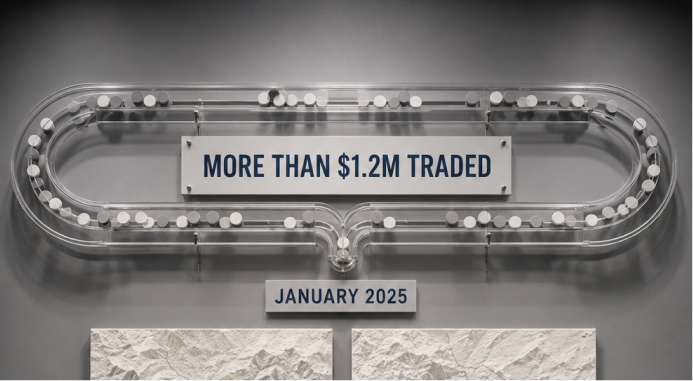
The letter cited public reports that Polymarket accepted more than $1.2 million in trades relating to the Palisades and Eaton fires during January 2025.
Markets reportedly asked when the fires would be contained, how many acres would burn and whether flames would reach particular areas. Because prediction contracts can be bought and sold repeatedly, reported volume should not automatically be interpreted as the amount ultimately won or lost by customers.
The Palisades Fire began in Pacific Palisades on January 7, 2025. It burned 23,448 acres before reaching full containment on January 31. The official Palisades Fire record lists 6,845 structures destroyed, another 975 damaged and 12 confirmed civilian fatalities.
The Eaton Fire began the same day in the Altadena area and produced additional deaths and extensive structural destruction. The senators said the two disasters together killed 31 people and destroyed more than 16,000 structures.
Those consequences explain why contract volume cannot be treated as an abstract measure of platform engagement. Every change in containment, acreage or structural loss reflected an emergency affecting residents, firefighters and public agencies.
Prediction-market supporters generally argue that trading aggregates dispersed information. A changing contract price can indicate what participants collectively believe is likely to happen.
That function is less persuasive when a market does not help a government, insurer or property owner hedge a defined economic exposure. A wildfire contract offered principally for speculation may collect information while simultaneously creating incentives that conflict with emergency-response priorities.
The $1.2 million figure does not prove that improper activity occurred. It demonstrates that disaster-related markets can attract meaningful participation before regulators have settled which subjects should be excluded.
Wildfire Contracts Create A Manipulation Risk
Most prediction markets face some possibility that a trader has better information than other participants. Wildfire contracts introduce the additional danger that a person may be able to affect the event itself.
A firefighter, dispatcher, utility employee, aerial contractor or public official could possess information about containment, wind shifts, suppression strategy or evacuation areas before it becomes public. Trading on that knowledge could undermine market integrity even when the individual did nothing to alter the fire.
A more serious scenario involves deliberate interference. Contracts tied to acreage, duration or containment could theoretically benefit someone who delays suppression, obstructs equipment, provides false information or starts another fire.
The senators did not claim that such conduct caused the Los Angeles trades. Their argument is preventive: regulators should evaluate whether the market creates a sufficiently dangerous incentive before misconduct occurs.
That issue complicates the normal concept of market manipulation. On a financial exchange, manipulation often involves distorted prices, false orders or deceptive information. In a disaster market, manipulating the referenced event could mean interfering with public safety in the physical world.
Settlement-source integrity presents another challenge. Wildfire statistics are revised as agencies receive mapping data, complete structure inspections and reconcile reports from different jurisdictions. A contract must specify which agency, publication, timestamp and revision determines the outcome.
A vague containment or acreage definition could generate disputes even when every participant behaves lawfully. A carefully drafted settlement rule can reduce ambiguity, but it cannot eliminate the ethical problem of attaching a financial payoff to expanding destruction.
Polymarket And Kalshi Have Taken Different Positions
The disputed Los Angeles markets appeared on Polymarket’s international platform. Polymarket also operates a separate U.S. exchange through QCX LLC, which is registered with the CFTC as a designated contract market.
That distinction matters. Federal registration of the U.S. operation does not automatically place every product offered through Polymarket’s international website inside the same domestic regulatory structure.
The senators acknowledged that the wildfire contracts appeared to be available only through the offshore platform. They nevertheless warned that a U.S.-registered exchange could attempt to self-certify similar products unless the CFTC establishes clear restrictions.
Kalshi, another CFTC-regulated prediction exchange, told reporters that it has not offered wildfire markets because they create what the company described as perverse incentives.
That position shows that platforms do not need to wait for a formal prohibition before excluding sensitive subjects. Operators can adopt product-governance standards that go beyond the regulatory minimum.
However, voluntary restraint by one company does not create an industry-wide rule. A competing platform may reach a different conclusion, particularly when controversial markets generate trading activity and media attention.
The divide also demonstrates why the term “prediction market” covers materially different operating models. A CFTC-registered U.S. exchange with identity verification and market-surveillance obligations is not identical to an international cryptocurrency platform with different access and enforcement conditions.
GClubGod’s examination of the Utah ruling on Kalshi markets explains a related jurisdictional conflict. States are challenging whether federal exchange regulation prevents them from applying gambling laws to event contracts. Wildfire markets add offshore enforcement and public-emergency policy to that unresolved dispute.
The CFTC Already Has Public-Interest Authority
The Commodity Exchange Act gives the CFTC authority to scrutinize particular categories of event contracts.
Section 5c(c)(5)(C) permits the commission to determine that a contract is contrary to the public interest if it involves terrorism, assassination, war, gaming, activity unlawful under federal or state law, or another similar activity identified through regulation.
If the commission makes that determination, the contract cannot be listed or cleared through a CFTC-registered entity.
The statute does not expressly name wildfires or natural disasters. The regulatory question is whether a particular wildfire contract falls within an existing category or should be treated as another similar activity that is contrary to the public interest.
In June, the CFTC issued a proposed event-contract framework that would establish a 90-day review process and define how the agency evaluates contracts involving enumerated activities. The proposal followed an advance notice published in March.
The commission reported that federally registered markets certified approximately 1,600 event contracts in 2025. That was a dramatic change from 2006 through 2020, when exchanges listed an average of approximately five per year.
This growth explains why regulators are moving toward a more structured review system. Case-by-case intervention becomes difficult when exchanges can rapidly introduce contracts across sports, politics, culture, weather and public emergencies.
CFTC rules already require designated contract markets to monitor trading, enforce contract terms and prevent manipulation or disruption of settlement. Those safeguards address market operation, but they do not fully answer whether a particular subject should be tradable at all.
Wildfire contracts force the commission to separate two questions: whether a market can settle accurately and whether allowing the market serves the public interest.
Offshore Enforcement Is More Difficult
The senators also asked what the CFTC can do about contracts offered on offshore platforms.
A U.S.-registered exchange is directly subject to CFTC rules, surveillance requirements and enforcement processes. The regulator can review product certifications, investigate conduct and bring actions when a registered entity violates federal commodities law.
An offshore platform creates more complicated jurisdictional and practical problems. The CFTC may act when an overseas business unlawfully solicits or serves U.S. customers, but identifying participants, preserving records and enforcing remedies across borders can require additional cooperation.
Polymarket previously faced a CFTC enforcement action over unregistered event-contract activity. In January 2022, the company agreed to pay a $1.4 million civil monetary penalty and wind down markets that did not comply with the Commodity Exchange Act.
Its later acquisition of QCX created a regulated path for a separate U.S. operation. It did not necessarily convert the company’s entire international product catalog into CFTC-approved domestic contracts.
This divided structure complicates the senators’ demand. The CFTC can establish a clear rule preventing U.S. designated contract markets from listing wildfire products. Stopping similar markets from reaching Americans through offshore services may require enforcement, technological access controls and cooperation outside the registered-exchange system.
The answer cannot be instructions for users to bypass territorial restrictions. Platforms are responsible for applying identity and location controls, while customers must follow the laws and terms applicable in their jurisdictions.
The 2026 Fire Season Raises The Stakes
The senators sent their letter while federal, state and local agencies were responding to a substantial 2026 wildfire season.
The National Interagency Fire Center statistics were updated on August 12 with 101 large fires under active suppression and 30,189 personnel assigned. The agency reported 6,447,442 acres burned across all year-to-date incidents.
| U.S. Wildfire Measure | August 12, 2026 |
|---|---|
| Year-to-date wildfires | 46,509 |
| Year-to-date acres burned | 6,447,442 |
| Large fires being suppressed | 101 |
| Personnel assigned | 30,189 |
Those numbers provide context rather than evidence about prediction-market misconduct. They show the scale of the real emergency against which the policy debate is occurring.
Wildfire information changes quickly and serves immediate safety purposes. Containment percentages, fire perimeters and evacuation notices help residents and emergency personnel make decisions. Turning those same updates into settlement triggers can place a speculative market alongside a public-warning system.
The risk is most acute when a contract concerns an active incident and resolves over a short period. A seasonal contract based on a final federal statistic may be less susceptible to immediate interference, although it can still raise questions about purpose and public interest.
Regulators could therefore distinguish among disaster markets instead of treating every weather-related contract alike. Temperature, rainfall and hurricane-risk products can support commercial hedging. A contract based on whether an active wildfire destroys more structures may offer little comparable risk-management value.
Guardrails Would Need To Address More Than Insider Trading
A workable regulatory response would require more than prohibiting government employees or firefighters from trading.
Participant restrictions can reduce the risk that people with privileged information profit from an event. They do not prevent a third party from attempting to influence the outcome, nor do they resolve whether the subject is appropriate for speculation.
Contract-level controls could include longer settlement periods, verified government data sources, trading surveillance, strict position limits and exclusions for participants connected to incident response. Platforms could also prohibit markets tied to deaths, structural destruction, neighborhood-level spread or active evacuation areas.
Yet even strong controls may not make every wildfire contract acceptable. The most direct safeguard is a subject-matter prohibition preventing certain contracts from being listed at all.
That is the choice the senators want the CFTC to confront. Their questions ask whether restrictions should be embedded in the current rulemaking instead of left to voluntary platform policies.
The regulator must also consider unintended consequences. A rule drafted too broadly could affect legitimate weather derivatives or insurance-related risk tools. A narrow definition focused on active disaster outcomes, public-safety interference and noncommercial speculation would be more precise.
The CFTC’s task is therefore not to decide whether forecasting fire risk is inherently improper. It is to determine when a tradable contract shifts from useful risk management or information aggregation into speculation that can threaten public confidence or create harmful incentives.

The August 14 Response Could Shape Future Contract Reviews
The senators requested answers by August 14, one day after the publication date of this article. That response may clarify whether Chairman Selig views wildfire contracts as an immediate enforcement matter, an issue for the pending rulemaking or primarily an offshore-access problem.
A written response alone would not automatically prohibit a product. Formal restrictions may require rulemaking, a commission determination concerning a particular contract or an enforcement action based on existing law.
The controversy nevertheless gives the CFTC a concrete test for its proposed public-interest framework. Sports and election contracts have produced jurisdictional disputes, but wildfire markets present a more direct connection between financial incentives and physical safety.
The reported $1.2 million in Los Angeles fire trading shows that these are not merely theoretical products. Platforms can create markets quickly as emergencies develop, allowing volume to accumulate before regulators or the public have evaluated the consequences.
For prediction-market companies, the lesson is that contract innovation requires subject-level judgment. Accurate settlement rules, market surveillance and federal registration cannot by themselves make every underlying event suitable for trading.
For regulators, wildfire markets reveal the gap between controlling conduct inside an exchange and protecting people affected by the event outside it.
The senators are asking the CFTC to close that gap before a market creates more than an ethical controversy. Whether the commission adopts a categorical restriction or a contract-specific review process, the emerging standard will help determine where U.S. prediction markets must stop.