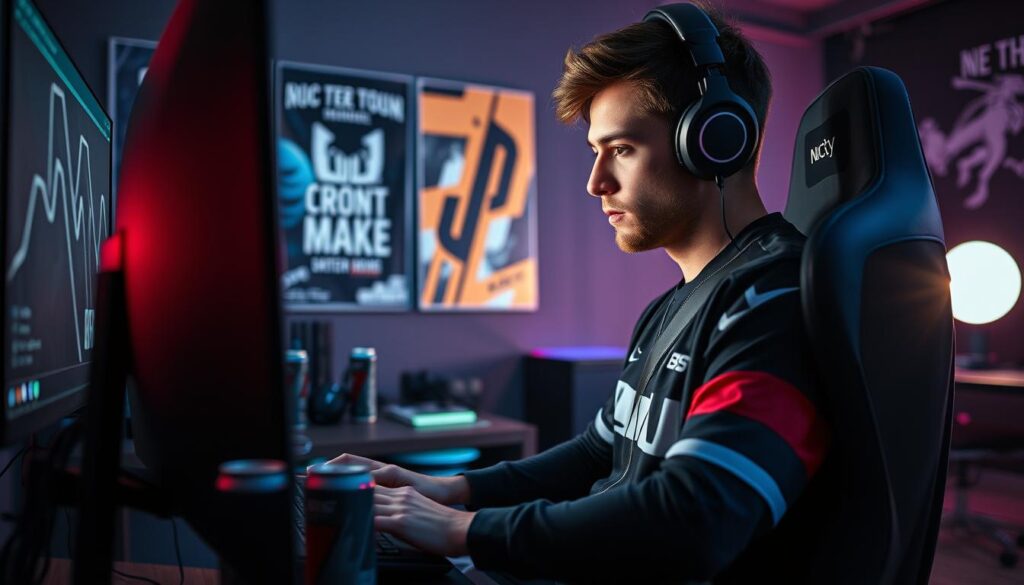
The life of a pro gamer is often misunderstood. Many think they just play games all day, earning millions easily. But, the truth is different. Top gamers work hard with intense training to stay ahead.
Behind the screens, pro gamers are dedicated athletes. They need quick reflexes, sharp instincts, and smart thinking. Their daily routines show how tough competitive gaming is. They mix practice, exercise, and mental prep.
Learning about a pro gamer’s life can show us what it takes to win in gaming.
The Demands of Pro Gaming
To stay at the top, pro gamers must follow a strict training plan. This plan includes both physical and mental preparation. They need to be in top shape to handle long gaming sessions and make quick, smart decisions.
Physical Demands: Pro gaming means sitting for hours, which can cause health problems like back pain and eye strain. A good esports fitness program helps by improving posture and reducing injury risks.
Mental Demands: The mental pressure of competitive gaming is huge. Players must handle stress, stay focused, and bounce back from losses. Techniques like meditation and planning are key to their success.
| Aspect | Physical Demands | Mental Demands |
|---|---|---|
| Challenges | Long sitting periods, eye strain, physical inactivity | Stress management, maintaining focus, quick recovery |
| Mitigation Strategies | Regular exercise, ergonomic setups, eye care | Meditation, strategic planning, mental health support |
In conclusion, pro gaming is tough, needing a full approach to health. By focusing on esports fitness, athletes can improve their game, avoid injuries, and stay competitive.
Typical Fitness Challenges for Esports Athletes
Pro gamers face many fitness challenges that can impact their gaming skills. The need for intense focus in competitive gaming often leads to a sedentary lifestyle. This can cause various health problems.
Gaming-related injuries like carpal tunnel syndrome and eye strain are common. Prolonged sitting can also cause back and neck problems. These issues make it hard for esports athletes to perform well.
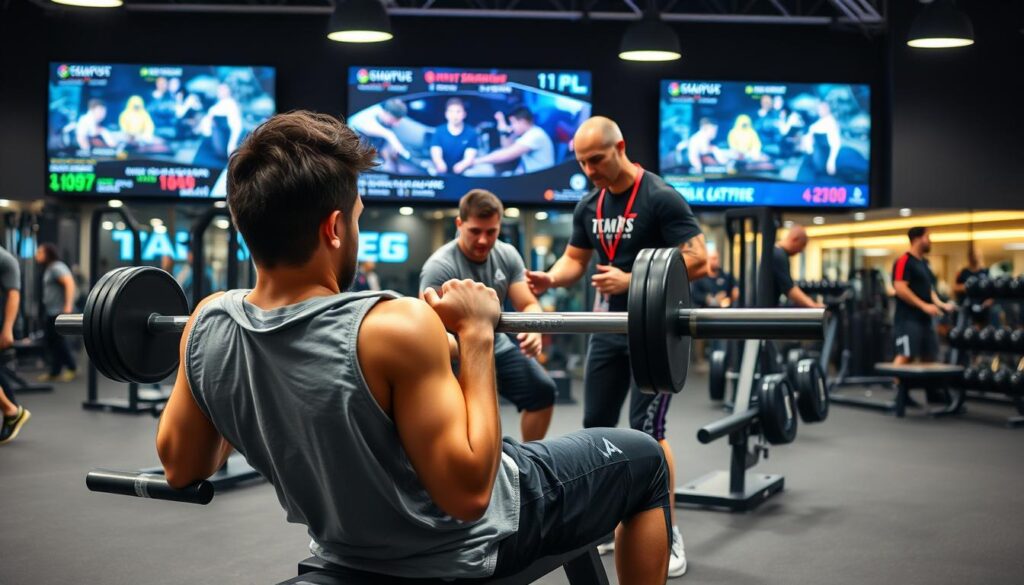
Good posture is key for esports athletes to avoid long-term damage. Regular exercise and stretching can help reduce these risks. For more on ideal workout routines, check out Activision Blizzard’s newsroom. They have training programs for esports athletes.
Eye health is also a big concern. Prolonged screen time can lead to vision problems. Esports athletes need to balance gaming with eye care routines and regular breaks to avoid eye strain.
By understanding these challenges, esports athletes can take steps to improve their fitness. They can adopt elite gaming routines to boost their performance and health.
Comprehensive Training Breakdown
eSports athletes train in many ways to get better at gaming. They work on reaction times, endurance, and staying competitive. A good training plan is key for success.
Warm-Ups, Cardio, Strength Training
A daily fitness plan for gamers includes cardio, strength training, and stretching. These help keep gamers in top shape. They also support mental focus during long gaming sessions.
Cardio, like running or cycling, boosts stamina and heart health. It lets gamers stay focused longer. Strength training prevents injuries by making muscles stronger and more flexible. Stretching keeps gamers in good posture and avoids injuries from repetitive actions.
Eye Health and Recovery
Eye health is very important for gamers. Long screen times can cause eye strain and fatigue. The 20-20-20 rule helps reduce these problems.
Recovery is also key. It lets the body and mind rest and get ready for more gaming. eSports nutrition is important here, providing the right food for top performance.
Reflex Training
Reaction time training is vital for esports. Gamers use special software and games to get faster and more accurate. These exercises help them react quicker in games.
By adding these training elements, esports athletes can improve a lot. They stay competitive and perform at their best.
Sample eSports Training Schedules
The world of esports needs a strict training plan. It’s both intense and very specific. Professional esports athletes have a routine that includes practice, physical training, and rest. This helps them stay at the top.
A pro gamer’s day often begins with game strategy and practice. They review their gameplay, look at mistakes, and work on skills. For example, a team might spend hours on past matches, finding ways to get better and coming up with new plans.
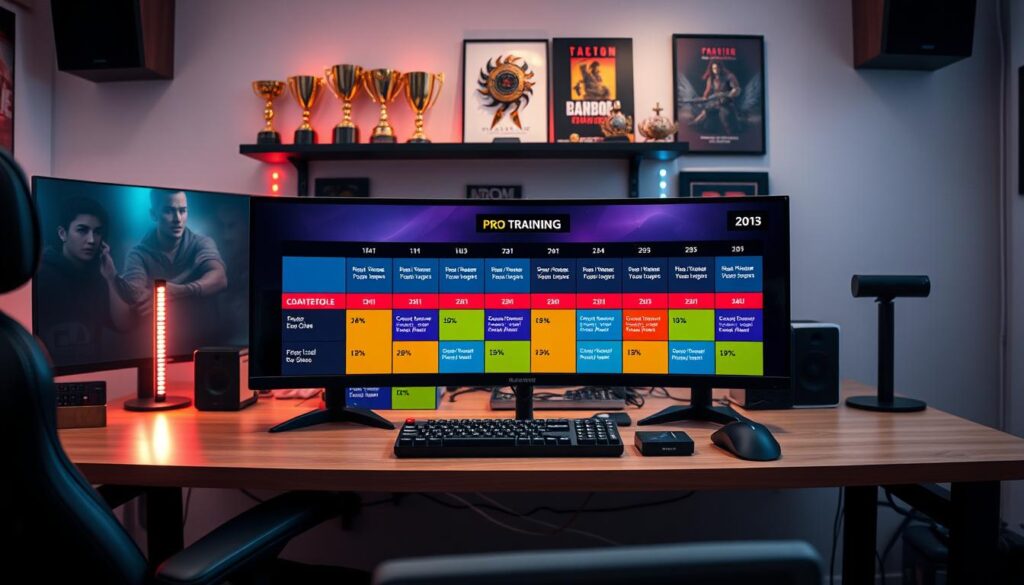
After morning practice, athletes do physical training. This boosts their endurance and lowers injury risk. They might do cardio, strength training, or yoga to improve flexibility and focus.
In the afternoon, they focus on reflex training and eye health exercises. These are key for staying sharp during long gaming sessions. They use quick visual exercises and eye relaxation techniques.
Here’s what a daily training schedule for a pro gamer might look like:
- 9:00 AM – 12:00 PM: Game practice and strategy review
- 12:00 PM – 1:00 PM: Lunch break and physical training
- 1:00 PM – 3:00 PM: Afternoon game practice
- 3:00 PM – 4:00 PM: Reflex and eye health training
- 4:00 PM – 5:00 PM: Review and plan for the next day
Following this strict pro gamer training schedule helps athletes perform better. It keeps them competitive and extends their careers in the fast-paced world of esports.
Interviews with Coaches/Athletes
We talked to coaches and athletes to learn more about esports fitness. They shared how staying active helps with focus, speed, and endurance. This is key for professional gamers.
One coach said, “The physical and mental demands of esports are often underestimated. A well-structured fitness program can significantly enhance a player’s performance and overall well-being.” Athletes also noticed better focus and speed after starting to exercise.
These insights show how important esports fitness is. It helps athletes perform better and stay in the game longer. Physical health is a big advantage in esports.
- Improved cognitive function through physical activity
- Enhanced reaction speed and endurance
- Better overall well-being and performance under pressure
As esports grows, so does the need for good fitness programs. Learning from coaches and athletes helps us see the value of physical training. It’s key to success in esports.
Nutrition and Supplementation Practices
Nutrition and supplements are vital for eSports athletes. A balanced diet keeps them physically and mentally fit for gaming.
eSports athletes need a diet that boosts their reaction time, focus, and stamina. A balanced mix of proteins, carbs, and fats is key for energy and health.
Staying hydrated is also important. Enough water improves focus and cuts down eye strain, vital during long gaming sessions.
Supplements add to an eSports athlete’s diet. They can improve brain function, energy, and recovery. For example, athletic training often suggests the right supplements.
Some popular supplements for eSports athletes include:
- Protein powder for muscle recovery
- Omega-3 fatty acids for brain health
- Antioxidants to reduce oxidative stress
It’s vital for eSports athletes to get advice from a healthcare expert or sports nutritionist. This helps tailor their diet and supplements to their needs and goals.
Real Pro Advice
The world of esports is very competitive. Top gamers get there by being dedicated and always getting better. They have a mindset of always improving, being disciplined, and thinking strategically. This is shown in their daily routines.
Professional esports athletes know they must follow elite gaming routines to stay competitive. These routines are more than just playing games. They also focus on physical and mental health.
Practice is a big part of these routines. Pro gamers have a set practice schedule. They mix solo and team play. For example, they might work on aim or movement on certain days. Other days, they focus on strategy and teamwork. Adding cardio exercises helps them last longer during games.
Mental preparation is also key. Top gamers do things to manage stress and stay focused. This can be meditation, visualization, or exercise. They aim to be in a state of flow, where they can perform at their best.
Strategic thinking is essential too. Pro gamers analyze their games, find areas to improve, and work on strategies. They might watch replays, study opponents, or keep up with game trends.
To keep up with elite gaming routines, pro athletes focus on recovery. They get enough sleep, eat well, and sometimes take supplements. The esports world is learning more about nutrition and performance. Top gamers lead this research.
In short, professional esports athletes say a holistic approach to gaming is key. It’s not just about playing. It’s about living a lifestyle that supports peak performance. By focusing on practice, mental prep, strategy, and recovery, gamers can reach and stay at the top in esports.
Adapting These Methods for Fitness Enthuisasts
Professional gamers’ training is not just for the pros. Fitness enthusiasts can also gain from their routines and diets. By adopting these habits, amateur gamers can boost their fitness and gaming skills.
Reaction time training is a big part of pro gamers’ training. Fitness enthusiasts can use simple exercises like reaction ball training or agility drills. These can improve reaction time and athleticism.
Combining reaction time training with a healthy diet and regular exercise can greatly improve gaming performance and overall health. Whether you’re a casual gamer or a serious athlete, these methods can positively impact your health and gaming abilities.