Success in any field starts with a clear direction. This is even more true in sports. Setting a well-defined goal is like a guiding light. It shapes your training and how you compete.
Having a High Performance Mindset can also make a big difference. It means being brave, focused, and never giving up.
Knowing your limits is just as important. This includes how much time you have to train and the equipment you have. By combining a clear goal with an understanding of your limitations, you can make a plan for success. This plan is both realistic and achievable.
This method is at the core of SMART goal setting. It’s a strategy that top performers use.
Translate to SMART and OKR-style targets
To achieve greatness, you need to define what greatness looks like. SMART and OKR-style targets help you do this. After finding your main goal, break it down into smaller, measurable steps.
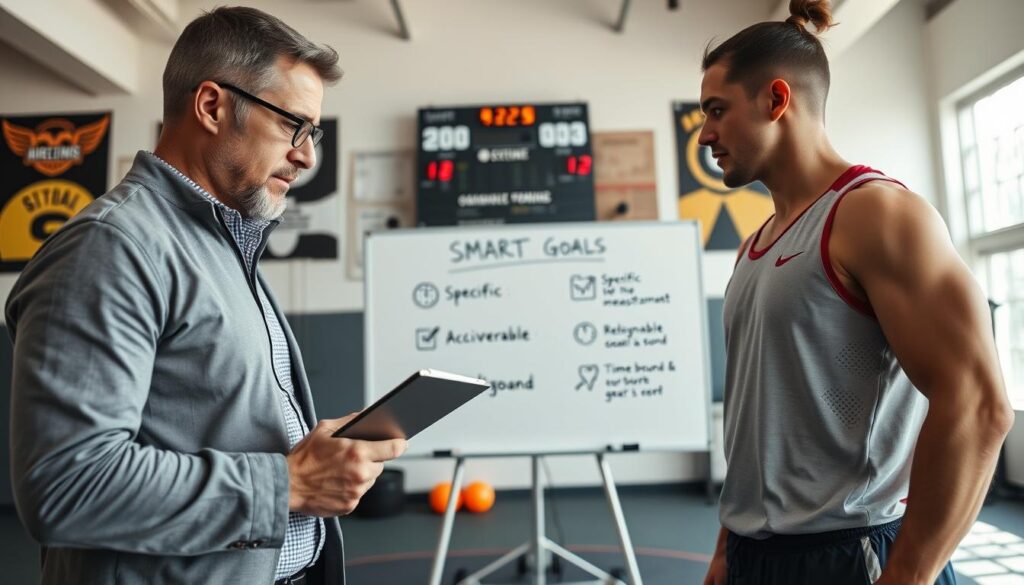
SMART goals are like a blueprint for your athletic dreams. SMART means Specific, Measurable, Achievable, Relevant, and Time-bound. For example, instead of saying “I want to be faster,” a SMART goal is “I will reduce my 5K run time to 25 minutes in the next 12 weeks.”
Setting Precise Targets for Sports Performance
Now, let’s explore how to set these targets. Endurance athletes might use GPS data to track their progress. Important metrics could be:
- Total distance run
- High-speed running distance
- Sprint distance
Strength training goals might focus on increasing your one-repetition maximum (1RM) or boosting your strength. For example, “I will increase my squat 1RM by 10% in the next 8 weeks.”
OKR-style targets go further by setting Objectives (what you aim to achieve) and Key Results (how you’ll measure success). For athletes, an objective might be to boost endurance. Key results could include finishing a certain number of training sessions at a specific intensity.
By turning your main goal into SMART and OKR-style targets, you create a clear path to success. This method not only improves your training but also keeps you focused on your athletic goals.
Periodization 101: base → build → peak → deload
Periodization is key to avoiding burnout and reaching top performance in sports. It’s a method for planning your workouts, making sure you’re ready when it counts. It’s like a roadmap to success, with each phase playing a vital role.
Understanding the phases of periodization
Periodization has four main phases: base, build, peak, and deload. Each phase has its own role, working together for a balanced training cycle.
Base phase: This phase lays the groundwork. It’s about building endurance and increasing your capacity. It’s like setting the stage for a big show.
Base phase: building a foundation
In the base phase, the focus is on building a solid foundation of fitness. You’ll do low to moderate intensity workouts with more volume. The aim is to get your body ready for harder training ahead, lowering injury risk.
- Increased volume of training
- Lower intensity
- Focus on technique and endurance
By using periodization, athletes can make their training better. They ensure they’re at their best when it matters most. It’s about training hard and smart.
Choose KPIs: 1RM, pace, VO2 proxies, jump height, body comp
Choosing the right KPIs is like picking the right gear for a mission. It depends on your goals. In sports, Key Performance Indicators (KPIs) help measure progress toward your main goal.
Not all KPIs fit everyone. It really depends on your sport. For endurance sports like running or cycling, KPIs might include pace, VO2 max proxies, or total distance. In strength sports like weightlifting, KPIs could be 1RM (one-repetition maximum) or jump height. Body composition is also key, as it affects performance.
Selecting the Right KPIs for Your Sport
To pick the best KPIs, know what your sport needs. For team sports like soccer or rugby, GPS data tracks total distance, high-speed running distance, and sprint distance. This data helps athletes and coaches see how they’re doing. You can learn more on our blog.
Here are some KPI examples for different sports:
- Endurance Sports: Pace, VO2 max proxies, total distance
- Strength-Based Sports: 1RM, jump height, power output
- Team Sports: Total distance, high-speed running distance, sprint distance
- General Fitness: Body composition, muscular endurance, cardiovascular health
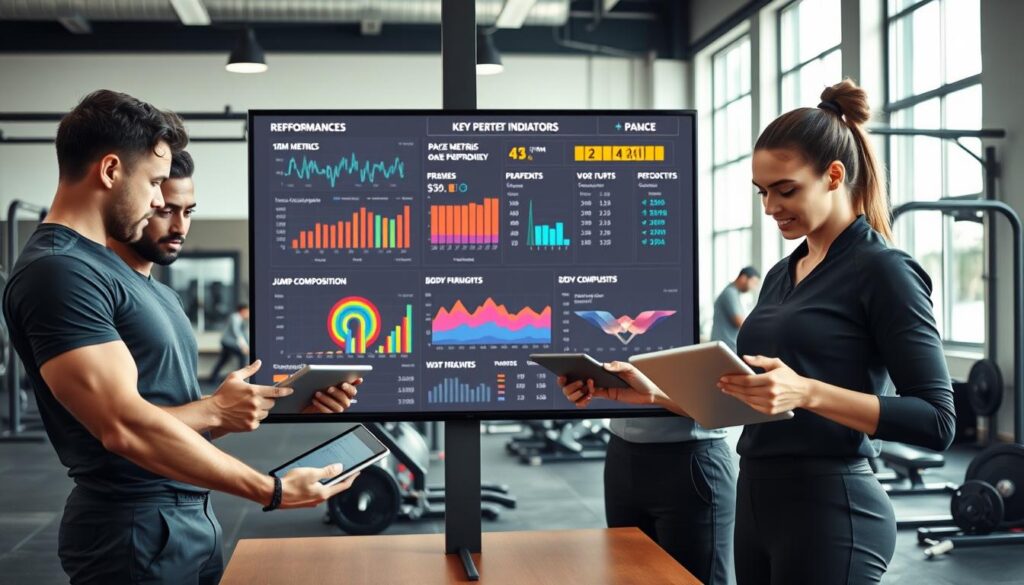
By tracking the right KPIs, athletes and coaches can improve training and recovery. It’s about finding the metrics that matter most for your goals. Then, use them to move forward.
Build weekly microcycles around sports skills
To improve your training, focus on building microcycles. These should balance intensity, volume, and recovery. They should fit into periodization and SMART goals. Your weekly training should target specific skills or performance areas.
Creating effective microcycles needs careful planning. You want to avoid overtraining or undertraining. A good microcycle might include high-intensity days and recovery days. For example, you could do sprint intervals or strength training one day, and yoga or a light jog the next. Make sure your microcycles match your sport’s needs and your own.
Designing Effective Microcycles
When making your microcycles, think about a few key things:
- Intensity: How hard you’re working, shown by heart rate, pace, or weight lifted.
- Volume: The total training time, like hours or miles.
- Recovery: Getting enough rest and recovery, through nutrition, sleep, and active recovery.
- Specificity: Making sure your training matches your sport or goals.
By balancing these, you can make microcycles that boost your training. For instance, a runner might have interval training, hill sprints, and long runs. These would be mixed with recovery runs or rest days.
Feedback loops: test days, film review, coach/AI check‑ins
Training without feedback is like navigating without a map; you might move, but you’re unlikely to reach your destination. In the world of sports, feedback loops are the navigators that ensure you’re on the right track.
Feedback loops involve regular test days to assess performance, film review to analyze technique, and coach/AI check-ins to get personalized guidance. This multi-faceted approach helps identify areas for improvement and informs adjustments to your training plan.
Data-Driven Adjustments
The integration of technology has revolutionized feedback loops, making them more precise and actionable. Tools like GPS and video analysis provide detailed insights into an athlete’s performance, enabling data-driven adjustments to training.
KPI tracking is a critical component of this process. By monitoring key performance indicators such as pace, jump height, or body composition, athletes can gauge their progress and make informed decisions about their training.
Performance testing is another vital aspect. Regular assessments help identify strengths and weaknesses, allowing for targeted improvements. Whether it’s a coach or an AI system providing feedback, the goal is to optimize performance through continuous refinement.
Incorporating feedback loops into your training regimen can be a game-changer. It’s not just about working hard; it’s about working smart, with a clear understanding of your progress and areas for improvement.
Risk management: injury buffers and recovery quotas
The secret to consistent athletic performance is not just hard training. It’s also about managing risks well, focusing on recovery and preventing injuries. Athletes and coaches need to know when to stop pushing themselves.
Keeping a balance between hard training and rest is key. Periodization helps athletes peak at the right times, avoiding overtraining and injuries. It structures training into phases to build endurance, strength, or speed safely.
Mitigating injury risk through recovery strategies
Good recovery is more than just resting. It’s about planning well. Recovery quotas are the time or resources set aside for rest in a training plan. This can include rest days, active recovery, or nutrition to help muscles heal.
- Regular performance testing helps track progress and adjust training.
- Adding injury buffers – times of less intensity or volume – helps recover and adapt.
- Using recovery techniques like foam rolling, stretching, or compression helps muscles heal.
By using these strategies, athletes can lower their injury risk. It’s about being proactive, anticipating risks, and taking steps to prevent them.

A good training plan balances tough workouts with enough rest. This balance lets athletes perform well while keeping injury risk low.
Gamified milestones and reward systems
Gamification is changing how athletes train, making it exciting. It adds game elements to training, boosting motivation and engagement.
Setting gamified milestones is a key part of gamification. These are goals that athletes can reach. For example, they might aim to lift 10 kg more in a month or train every day for a week. Achieving these goals is very motivating, showing progress and success.
Enhancing motivation through gamification
Gamification is more than just setting goals. It’s about rewarding athletes for their progress. Reward systems give athletes something special when they hit milestones. This could be a new piece of gear, a massage, or even a treat.
To succeed in gamification, make it personal and meaningful. This means:
- Setting OKRs for fitness that are tough but doable.
- Creating a SMART goal plan that fits the athlete’s needs.
- Adding competition, either against oneself or others, to boost drive.
For more tips on training like a pro, see our guide on how to train like an athlete. By using gamified goals and rewards, athletes stay motivated and see better results.
Nutrition Goals that Support Phases (Carb Periodization)
Nutrition plays a big role in athletic performance, just like training does. Athletes often focus on their workouts but forget about nutrition. By matching nutrition to each training phase, athletes can boost their performance and meet their training goals.
Aligning Nutrition with Training Phases
Carbohydrate periodization matches carb intake with training demands. This strategy improves performance and helps with recovery. It makes sure the athlete’s body gets the right fuel for their training.
Key Considerations for Carb Periodization:
- Matching carb intake to training demands
- Adjusting nutrition during different training phases
- Monitoring performance and recovery
To align nutrition with training phases, athletes should follow these guidelines. The table below shows carb intake for different training phases.
| Training Phase | Carb Intake | Objective |
|---|---|---|
| Base Building | Moderate | Build endurance |
| Intensity | High | Enhance performance |
| Recovery | Moderate to High | Aid recovery |
Remember, nutritional needs vary. They depend on the athlete’s sport, training intensity, and health goals.
By using carb periodization, athletes can improve their training. They can optimize their performance and recovery.
Example 12‑week plans for strength, run, and mixed sport
Let’s get into the details of periodization with some real examples. To really get how to plan training for different sports, we need to look at specific 12-week plans.
Periodization is key in athletic training. It helps athletes peak at the right time and avoid burnout. By dividing training into phases, athletes can steadily move towards their goals.
Applying Periodization to Different Sports
Different sports need different periodization approaches. For example, strength training focuses on building muscle, while running focuses on heart health.
Strength Training 12-Week Plan: The first four weeks build a strength base. The next four weeks up the intensity. The last four weeks are for peaking and then relaxing.
- Weeks 1-4: Building strength with higher rep ranges (8-12 reps)
- Weeks 5-8: Increasing strength with moderate rep ranges (4-6 reps)
- Weeks 9-12: Peaking with low rep ranges (1-3 reps) and then relaxing
Running 12-Week Plan: Runners might follow this plan:
- Weeks 1-4: Building endurance with longer runs
- Weeks 5-8: Increasing intensity with interval training
- Weeks 9-12: Tapering before a big event
Mixed Sport 12-Week Plan: Athletes in mixed sports, like triathletes, need a plan that balances different training.
Example: Weeks 1-4 focus on building a base in all areas (running, swimming, cycling). Weeks 5-8 increase intensity in each area. Weeks 9-12 fine-tune and taper.
By using periodization, athletes can make effective 12-week plans. These plans are tailored to their needs, whether for strength, endurance, or a mix.
These examples show how periodization and OKRs for fitness can be used together. They help athletes reach their goals.
Templates: goal board, KPI dashboard, review cadence
To make your sports goal real, you need a system to keep you on track. Templates are your key to success in achieving SMART goals and tracking KPIs.
First, create a goal board to see your objectives. It can be a physical board or a digital one, like Trello or a spreadsheet. Use it to break down your main goal into smaller steps.
Effective Template Strategies
Then, make a KPI dashboard to watch your progress. It could be a simple table or graph that tracks important metrics, like 1RM or pace. Checking your KPIs often helps you stay on target.
Set up a review schedule to check your progress and tweak your plan if needed. Have regular meetings with yourself or your coach to review your KPIs and adjust your strategy.
Using these templates keeps you organized, motivated, and focused on your SMART goals. With regular KPI tracking and reviews, you’ll be well on your way to reaching your sports goals.