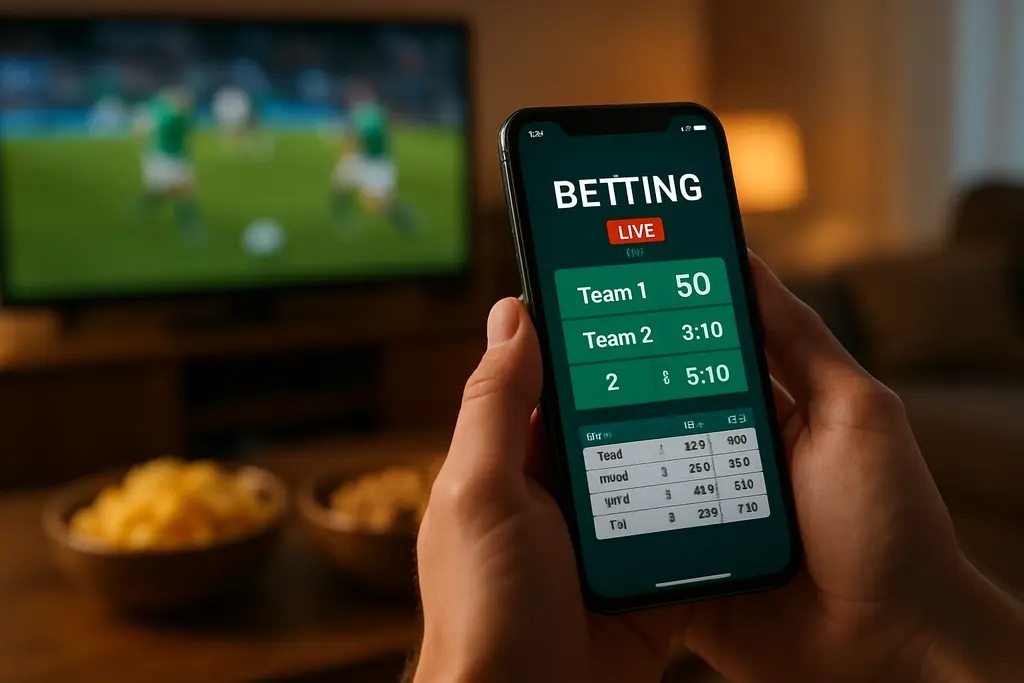
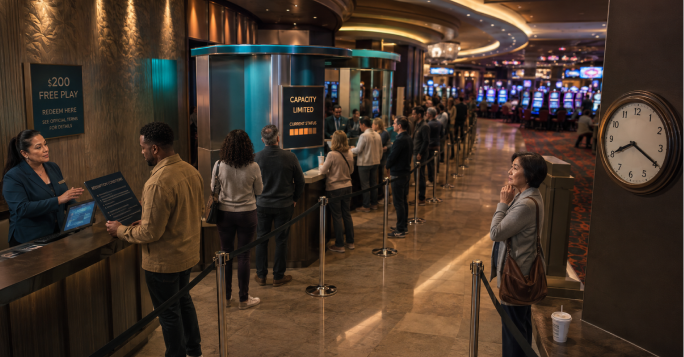
Treasure Island canceled a $200 free-slot-play promotion after overwhelming demand produced hours-long lines across the Las Vegas casino and exhausted the offer’s planned capacity in only three days.
The promotion began on Monday, August 10, 2026. It was initially scheduled to run Mondays through Wednesdays until September 7, but Treasure Island ended it on August 12 after crowds exceeded the property’s operational expectations.
Customers reportedly waited as long as six hours to obtain or use a Treasure Island loyalty card. Some people were still in line late Wednesday when the property stopped processing the offer, creating confusion about whether patrons positioned before the announced cutoff would receive the promised credit.
The episode was more than an unexpectedly popular casino promotion. It became a real-world demonstration of scarcity, social proof, commitment, queue psychology and the sunk-cost effect operating simultaneously.
A $200 reward attracted attention because it was considerably larger than the free-play amounts commonly distributed by Las Vegas Strip casinos. Once social-media posts showed hundreds of people waiting, the visible crowd became evidence that the offer was unusual and potentially worth pursuing.
The longer customers remained in line, the harder it could become to leave. Walking away after several hours meant accepting that the time already spent would produce no reward—even though those past hours could not be recovered by waiting longer.
That does not establish that every person acted irrationally. Customers assigned different values to their time, and the offer’s expected return depended on its rules and the volatility of the selected slot. The event nevertheless illustrates how promotional design can shape behavior before anyone begins gambling.
The $200 Offer Generated More Demand Than Treasure Island Expected
Treasure Island distributed the promotion through email, direct mail, app notifications and its casino database. Information quickly moved beyond the original recipients as customers shared the offer through social media and Las Vegas discussion channels.
The credit was reportedly available to both new and existing members of the Treasure Island rewards program. New customers first needed to register for a loyalty card, while existing members could activate the promotion at participating kiosks.
According to a report on the Treasure Island promotion, the credit could be used across more than 1,700 slot machines. Once activated, it had to be used within 24 hours and wagered completely before any resulting cash value could be withdrawn.
The availability window and one-per-player restriction created a defined opportunity. The unusually large headline amount supplied the attraction, while the limited schedule added urgency.
| Promotion Element | Reported Condition | Behavioral Effect |
|---|---|---|
| Headline reward | $200 in free slot play | Made the offer appear unusually valuable |
| Eligibility | New and existing loyalty members | Expanded the potential audience |
| Availability | Monday through Wednesday | Concentrated demand into short periods |
| Redemption | Loyalty desk and casino kiosks | Created physical processing bottlenecks |
| Activation period | Credit used within 24 hours | Increased time pressure after redemption |
| Play requirement | Entire credit wagered before withdrawal | Encouraged completion of a full session |
| Original end date | September 7, 2026 | Suggested several weeks of availability |
| Actual duration | Three days | Converted a limited offer into immediate scarcity |
By Tuesday, lines reportedly extended through multiple areas of the casino. Limited kiosk and loyalty-desk capacity slowed processing, while each social-media image of the queue exposed the offer to another audience.
Treasure Island later said the promotion had reached its planned capacity earlier than anticipated. The property did not publicly disclose the number of completed redemptions, new loyalty enrollments or total promotional credits distributed.
Reports estimating that the cost could have reached seven figures have not been confirmed by the casino. Without verified redemption data, the final promotional expense should remain undisclosed rather than inferred from crowd size.
Scarcity Increased The Offer’s Perceived Value
Scarcity affects decisions because people frequently treat limited availability as evidence that an opportunity is valuable.
The original promotion already contained several scarcity cues. Redemption was available on only three days each week, each customer could claim it once, and the promotion had a published end date.
Demand introduced another form of scarcity: processing capacity. Even if the promotion remained technically active, a customer could not obtain it without reaching a kiosk or loyalty representative before operations ended.
Social media then intensified those cues. Posts showing long lines communicated that many other people wanted the same reward and that capacity might disappear.
Recent consumer research has examined how scarcity cues and social proof contribute to urgency. These mechanisms can reinforce each other: limited availability creates concern about missing an opportunity, while visible participation suggests that other people have already judged it worthwhile.
In Las Vegas, this feedback loop operated in a physical setting. A growing line was not merely an inconvenience. It was also a public signal that the $200 credit differed from routine casino promotions.
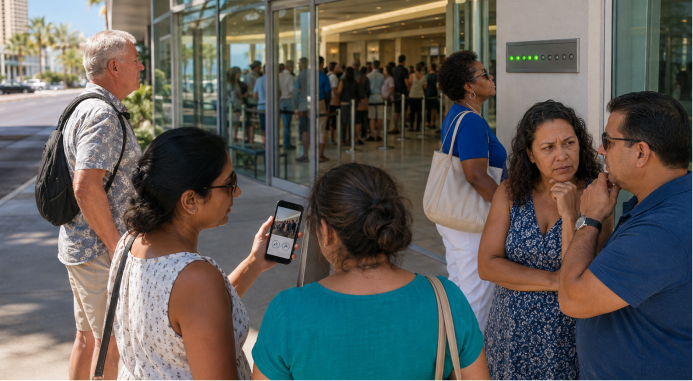
The cancellation validated the belief that the offer could disappear. Customers who arrived early received something that later arrivals could no longer access, strengthening the perceived importance of acting promptly.
That sequence presents a customer-communication problem. Scarcity can generate attention, but scarcity that develops through unplanned capacity limits is different from a clearly disclosed cap.
If the number of redemptions was limited, stating that limit or establishing reservations could have allowed customers to judge their chances before committing hours to the process. Without that information, the queue became an uncertain contest for access.
The Crowd Became A Form Of Social Proof
Social proof describes the tendency to use other people’s behavior as evidence when deciding what to do, especially when the situation is uncertain.
A customer encountering a six-hour line could interpret it in two opposite ways. The wait might show that the promotion was operationally impractical. It could also suggest that the reward was so valuable that hundreds of other people considered the delay acceptable.
The second interpretation becomes more powerful when individuals lack complete information. A passerby may not know the full wagering rules, processing time or likelihood of redemption, but the crowd supplies an immediate visual shortcut.
Digital sharing expanded that effect beyond the casino floor. Photos and updates transformed a property-level promotion into a Las Vegas news event. Friends forwarded the details, travel communities discussed the offer, and people who were not included in the original marketing database learned about it.
This creates a distinction between intended and actual reach. Treasure Island could control the recipients of an email or app notification, but it could not prevent those customers from broadcasting the opportunity to a substantially larger audience.
Casinos routinely design promotions around expected response rates. A campaign can become unstable when social amplification destroys those assumptions.
The GClubGod analysis of the Borgata Online casino experience examines how interface reliability affects player perception online. Treasure Island demonstrated the physical equivalent: a compelling offer can be undermined when the redemption system cannot support the demand it creates.
The customer does not separate marketing from operations. The promotion, queue, kiosk, loyalty desk, staff communication and final redemption decision form one experience.
Waiting Created A Commitment Problem
Once a customer joined the Treasure Island line, the decision was no longer simply whether $200 in slot credit justified a future wait.
After one hour, the relevant choice became whether to leave after investing an hour. After three hours, abandoning the line meant receiving nothing in exchange for a much larger time commitment.
Economically, time already spent is a sunk cost. It cannot be recovered regardless of whether someone waits another minute or another three hours. The forward-looking decision should depend on the expected remaining wait, the likelihood of receiving the reward and the individual’s alternative use of time.
People do not always evaluate the situation that way. Previous investment can create pressure to continue because abandoning the effort makes the earlier cost feel wasted.
This is related to escalation of commitment: a person continues allocating resources to a decision partly because substantial resources have already been committed.
The effect is not limited to casinos. It appears in projects, subscriptions, relationships, travel lines and purchases. The Treasure Island episode made it unusually visible because participants could measure their investment in hours spent physically standing in one place.
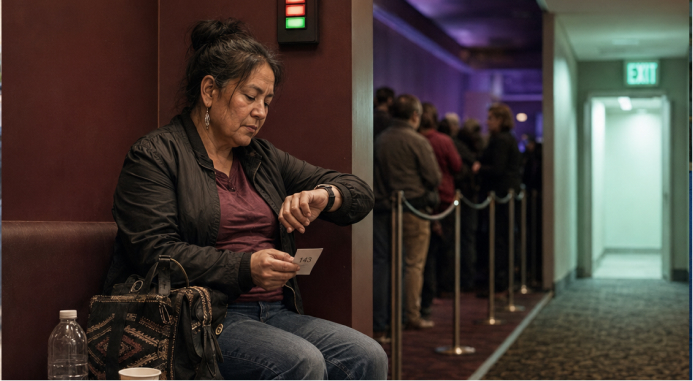
Queue research has also found that waiting can sometimes increase subsequent consumption. In experiments on queueing and customer behavior, people who waited longer sometimes consumed more afterward, partly because they sought to make the experience feel worthwhile.
That finding should not be treated as proof of what every Treasure Island customer did. It identifies a relevant risk: after spending hours obtaining casino credit, a participant may feel pressure to complete the gambling session, remain at the property or add personal funds to justify the effort.
The reported rule requiring all $200 to be played before withdrawing eligible proceeds reinforced completion. The promotion was not $200 in cash handed to each participant. It was restricted gaming credit that had to pass through a slot machine.
Free Play Is Psychologically Different From Cash
Promotional casino credit can feel less costly to wager than money taken directly from a bank account or wallet.
Behavioral economists describe this type of separation through mental accounting. People place funds into subjective categories and may treat a bonus, refund, loyalty reward or promotional credit differently from earned income—even when each can influence their financial outcome.
Labeling the offer as “free play” emphasizes what the customer did not pay to receive it. That framing can reduce the perceived significance of wagering the balance.
However, promotional credit is not automatically equivalent to withdrawable cash. Treasure Island reportedly required the full balance to be wagered, and the amount ultimately available for withdrawal depended on game outcomes.
A slot’s theoretical return applies across a very large number of plays. It does not predict what one person will receive during a short promotional session. The customer could finish with substantially more or less than a mathematical long-run average, including nothing.
The size of the visible balance can also create an anchoring effect. Seeing $200 in a casino account establishes a reference point, even though that figure does not represent guaranteed cash value. Finishing the session with less may psychologically feel like losing part of the reward.
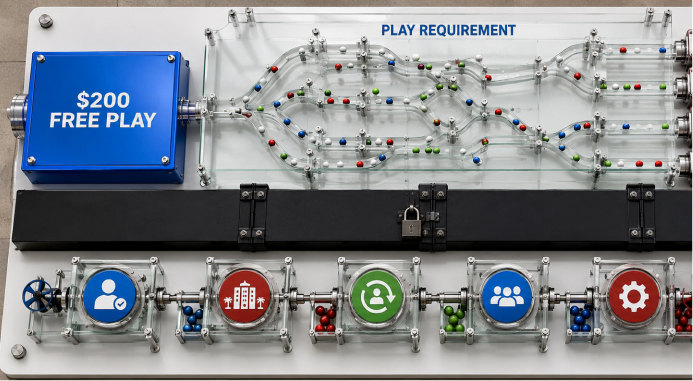
This is why precise terminology matters. “$200 free slot play” describes a conditional gaming credit. It should not be presented as a guaranteed $200 payment.
The distinction becomes especially important when customers incur travel, parking, meal or time costs to collect the promotion. A person who spends six hours waiting has already paid a meaningful noncash price before the first spin.
The Redemption Rules Concentrated Play Into One Session
Treasure Island’s reported 24-hour activation period encouraged recipients to use the credit promptly.
Short expiration windows are operationally convenient. They limit outstanding promotional liabilities and connect the reward with a specific visit. They also increase time pressure.
A customer who has already waited hours may be tired, frustrated or less prepared to make deliberate decisions. Requiring the credit to be used quickly can move the person directly from a demanding queue into an extended slot session.
The promotion reportedly required participants to wager the entire $200 before withdrawing eligible proceeds. That structure encouraged continuous completion rather than allowing someone to use a small part and return later.
The rules did not force customers to deposit personal money. The psychological transition from promotional funds to personal funds nevertheless deserves attention.
Once the free-play balance is exhausted, the person remains seated at the machine, enrolled in the loyalty program and emotionally invested in the session. Continuing requires less effort than leaving, particularly after a positive result, near miss or frustrating loss.
Responsible promotion design can add a deliberate stopping point when the promotional balance ends. A clear notification could show the outcome, distinguish remaining withdrawable funds from personal funds and offer an easy way to end the session.
Research into casino loyalty programs suggests that rewards can also support protective behavior. One study found that incentivizing responsible-gambling tools increased participants’ stated willingness to use those tools while improving attitudes toward the operator.
Promotional engagement and responsible-play controls therefore do not have to operate as opposing systems. The same loyalty infrastructure used to issue free play can surface session reminders, limits and clear transaction summaries.
Communication Failures Changed The Final Stage Of The Queue
The promotion’s most damaging moment may not have been the original demand forecast. It was the uncertainty experienced by people still waiting when redemption stopped.
Casino.org reported that patron Michelle Miller entered the line at 6:38 p.m. on August 12 and waited approximately five and a half hours. According to her account, a cutoff marker was placed behind her group, and those ahead of it were initially told they would be included.
She said that changed at approximately 11:50 p.m., producing an angry response from people who had remained in line based on the earlier information.
Her description is one customer’s account rather than an independently verified measurement of everyone’s experience. It nevertheless identifies a central service-design issue: a queue creates an implicit promise when staff tell customers that their position qualifies.
Operational information has behavioral value. Customers decide whether to continue waiting based on estimated processing time, remaining capacity and staff assurances.
If those signals change without a clear explanation, the customer loses not only the expected promotion but also the opportunity to use the waiting time elsewhere.
A well-managed capacity-limited promotion could issue numbered reservations, display real-time availability or stop admitting people when fulfillment becomes uncertain. Those controls create friction at the beginning but reduce conflict at the end.
The Treasure Island response came only after demand had already filled the property. By then, scarcity and commitment were working against an orderly cancellation: the customers most affected were precisely those who had invested the most time.
Promotion Economics Extend Beyond The $200 Credit
Free-play promotions are acquisition and retention tools rather than unrestricted gifts.
New customers joined Treasure Island’s loyalty program to access the offer. Existing members returned to the property, activated their cards and generated fresh behavioral data.
The casino could potentially benefit from future visits, food and beverage spending, paid play and a larger marketing database. Even customers who withdrew proceeds without adding money contributed traffic and attention.
The $200 headline amount therefore cannot be evaluated only as a direct promotional expense. Its business value included enrollment, reactivation, media coverage and the possibility of longer-term customer relationships.
The incident also created costs that are harder to measure:
- employees had to manage unusually large lines;
- regular casino circulation was disrupted;
- kiosks and loyalty desks became bottlenecks;
- customers who failed to redeem the offer reported frustration;
- the early cancellation could reduce trust in future promotions.
Treasure Island said the offer reached its planned capacity. That wording indicates a limit existed internally, but customers apparently did not know when the limit was approaching.
Transparent capacity does not necessarily weaken a campaign. It can make scarcity more credible while allowing participants to make informed choices.
The more consequential question is whether the casino acquired loyal customers or merely attracted one-time promotion seekers. A line generated by an unusually valuable offer demonstrates demand, but it does not prove that the resulting accounts will become profitable or satisfied long-term relationships.
Casino Psychology Should Inform Safer Promotion Design
The Treasure Island promotion succeeded at attracting attention. Its failure came from the interaction between marketing psychology and operational capacity.
Scarcity made the offer feel valuable. Social proof expanded its reach. Time already spent encouraged people to stay. The restricted credit created a reason to complete a gambling session after redemption.
Each mechanism is understandable on its own. Together, they produced a stronger behavioral system than the headline offer suggested.
Casinos can reduce that risk without eliminating promotions. Useful safeguards include clearly published capacity, appointment-based redemption, accurate queue estimates, numbered eligibility confirmations and unambiguous communication when availability changes.
The gambling stage also needs separation from the redemption stage. Customers should receive clear explanations that promotional credit is not cash, results vary, the entire balance may need to be wagered and personal funds are not required to complete the offer.
A defined stop screen after promotional play could reduce the likelihood that momentum carries directly into unplanned personal spending. Loyalty programs can also make responsible-play tools as visible as promotional rewards.
These changes would not guarantee that every customer makes an optimal decision. They would improve the information available when customers decide whether the reward justifies their time and whether they want to continue after the promotional balance ends.
Treasure Island’s $200 campaign became a Las Vegas spectacle because the reward was unusually generous and the demand was unexpectedly visible. The deeper lesson concerns design: a casino promotion does not end when an advertisement reaches the customer.
It continues through the queue, the staff instructions, the loyalty account, the redemption rules, the machine session and the decision to stop. When those stages are not planned as one system, scarcity and commitment can turn a successful response into a breakdown in trust.